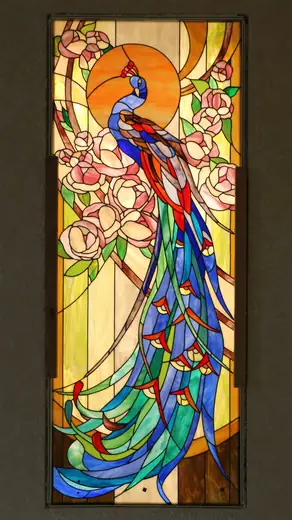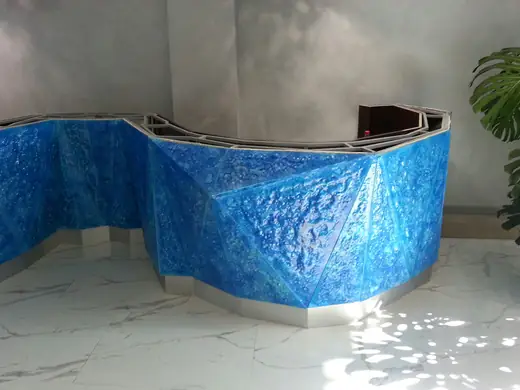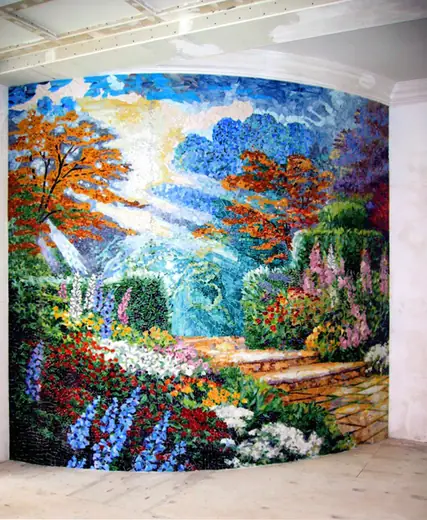
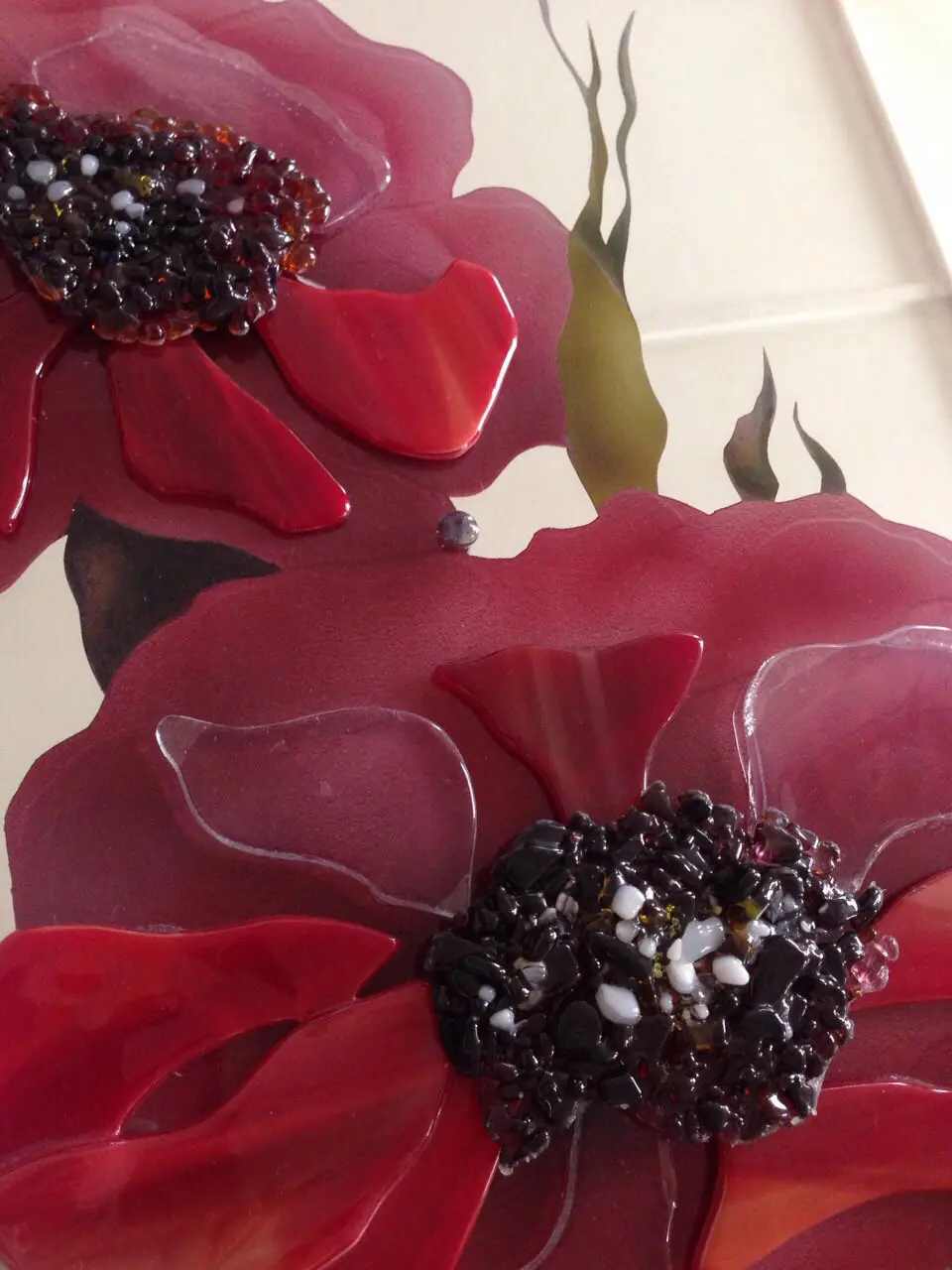
How the technique works
Pieces of stained glass are laid on a single sheet of glass and fired in a kiln. After the heat treatment the glass becomes uniform. The image can be made three-dimensional and raised or left flat, and the outlines come out soft, as in watercolor. We set the thickness and relief of the stained glass to suit the task.
A bit of history
Fused glass was found during excavations in Ancient Egypt. Stained glass makers returned to this technique in 1990 in Germany, where the first stained glass piece with fusing was made.
Advantages of fusing
- The pieces are multilayered and therefore strong. They are installed in niches, partitions, doors and windows.
- They resist moisture and temperature swings: suitable for outdoors, pools, saunas and bathrooms.
- The color does not age or change over time.
- Both relief and flat sheets with smooth transitions between shades are possible.
What we make
Doors, windows, tabletops, ceilings, kitchen cabinet fronts, niches, partitions, furniture, sliding-door wardrobes. And also small items: clocks, plates, pictures, candle holders, photo frames, souvenirs.