Stained glass techniques: how to choose the right one
Dom Stekla
This article in other languages: Українська · Русский
Stained glass is beauty set in glass, and it brings joy. The American psychiatrist Elisabeth Kübler-Ross compared people to stained glass windows: they shine while the sun is out, but when night falls, their true beauty shows only if the light comes from inside. It is hard to disagree, since stained glass is what gives a home real luxury and a cozy feel of its own. So what stained glass techniques are there, and where is each one used?
A stained glass piece does more than change an interior: it fills it with its own energy. It draws every eye, and it is rightly seen as the jewel of a home.
If you have settled on the design but cannot decide on the technique, start by learning what techniques exist. You can read up on them yourself or ask the designers and artists of the workshop that will make your piece. Each piece calls for its own technique, depending on the design, the purpose of the piece and where it will be placed. Here is a quick look at the main techniques and where they can be used.
Tiffany stained glass
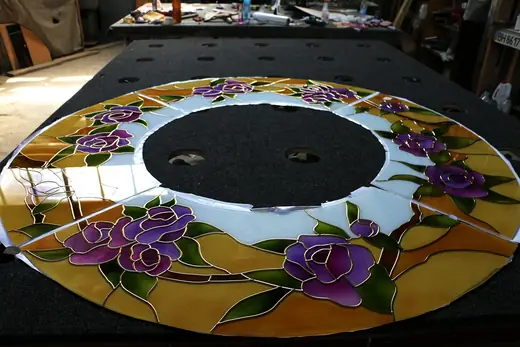
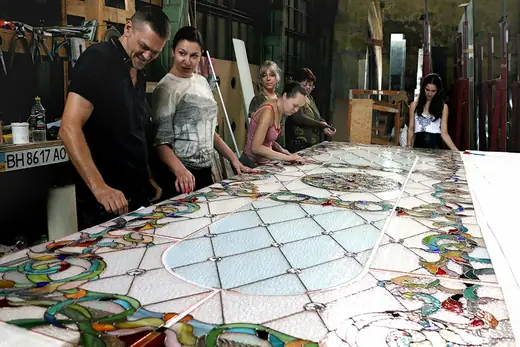
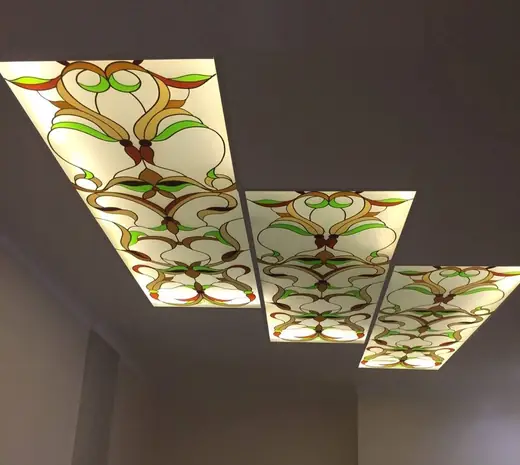
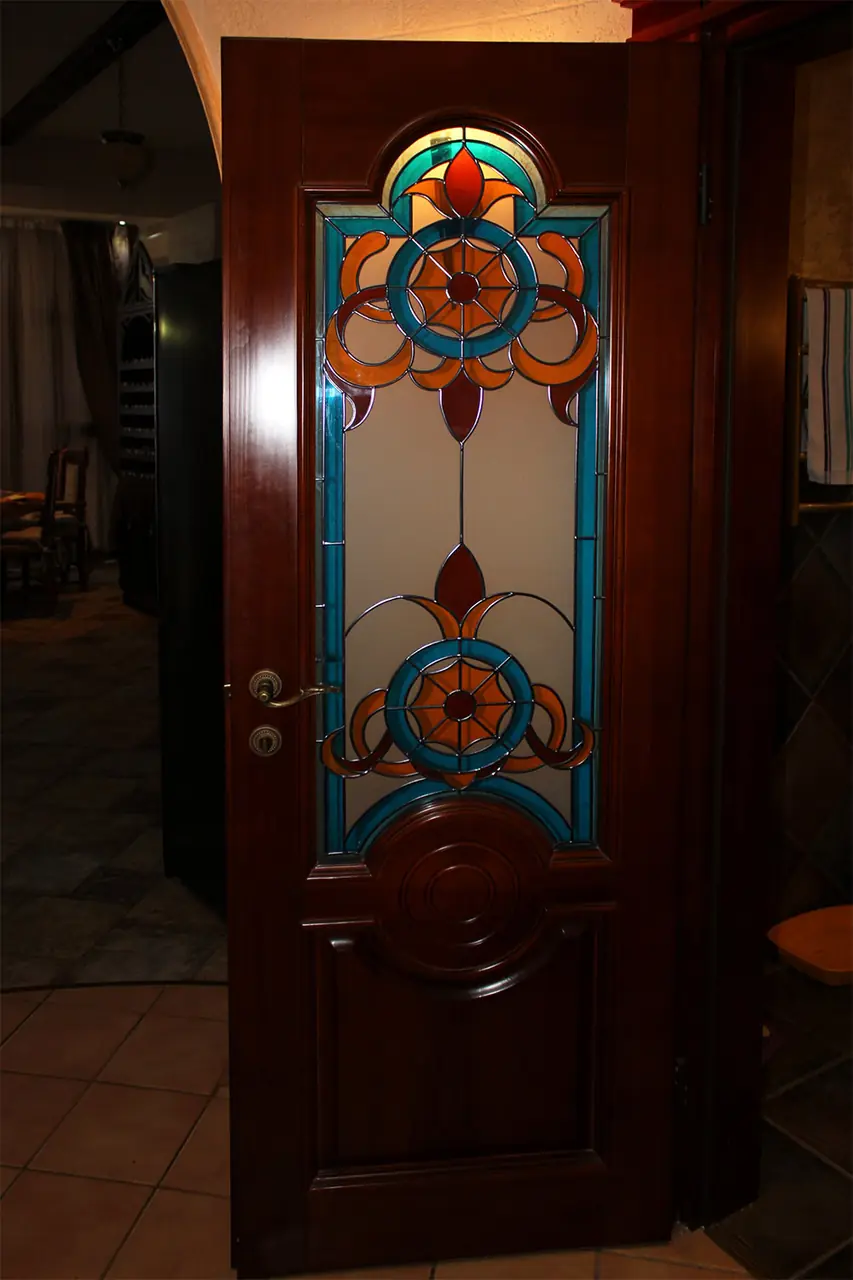
One of the most expensive and refined techniques. Each piece of colored art glass is cut by hand and ground, then wrapped in copper foil, and the pieces are soldered together with tin. This technique is used for stained glass windows, doors, ceilings, niches, partitions and pictures, as well as three-dimensional pieces: domes, vases, lamps and art objects.
Faux stained glass (film stained glass)
Faux stained glass imitates Tiffany stained glass. Colored decorative films and lead strip are applied to sheet glass or acrylic glass, giving the piece its color and texture. Like Tiffany glass, it suits any surface.
Fusing
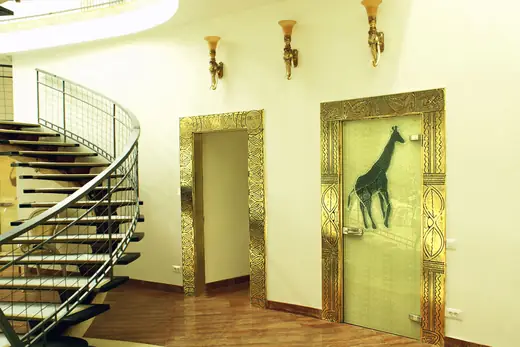
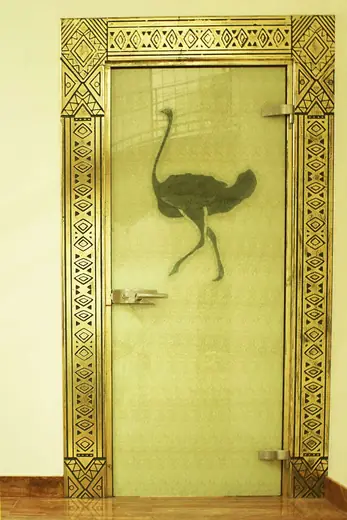
Fusing is one of the most popular techniques today. Pieces of art glass are laid out on a single sheet of glass and fired in a kiln, which gives the surface a uniform finish. Fused pieces are very strong and stand up to moisture and temperature changes, so fusing works well for niches, partitions, doors, windows, furniture, ceilings, stained glass for bathrooms and pools, and also for plates, clocks, ashtrays, pictures, photo frames and souvenirs.
Stained glass painting
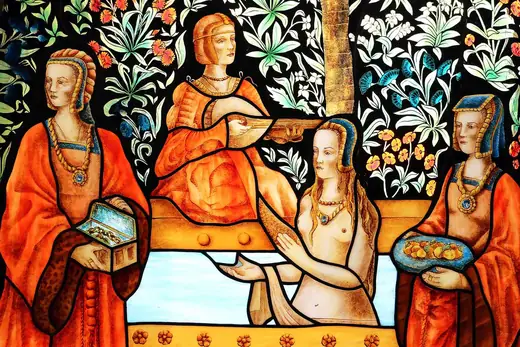
Painting on glass imitates classic stained glass. It is used to decorate glass and mirror surfaces and to draw individual details of a design. Unlike photo printing, hand painting carries the artist's mood and brings elegance and individuality to an interior. It can decorate any surface.
Mosaic
Mosaic makes a beautiful imitation of a glass carpet or a wall panel, so it is used to decorate interiors and furniture. The images are made from small pieces of colored art glass or stone. Mosaic has been valued for its practicality and beauty since ancient times, and today it is used to clad building facades, kitchen backsplashes, pool basins and fountains, and to decorate garden furniture and souvenirs.
What decides the choice
The design and the place the piece will take in the interior are the key factors in choosing a technique. Ask experienced stained glass artists which technique to use, and your idea will turn into a fine piece of stained glass.
More on each technique on the Services page.