The frost effect on glass
Dom Stekla
This article in other languages: Українська · Русский
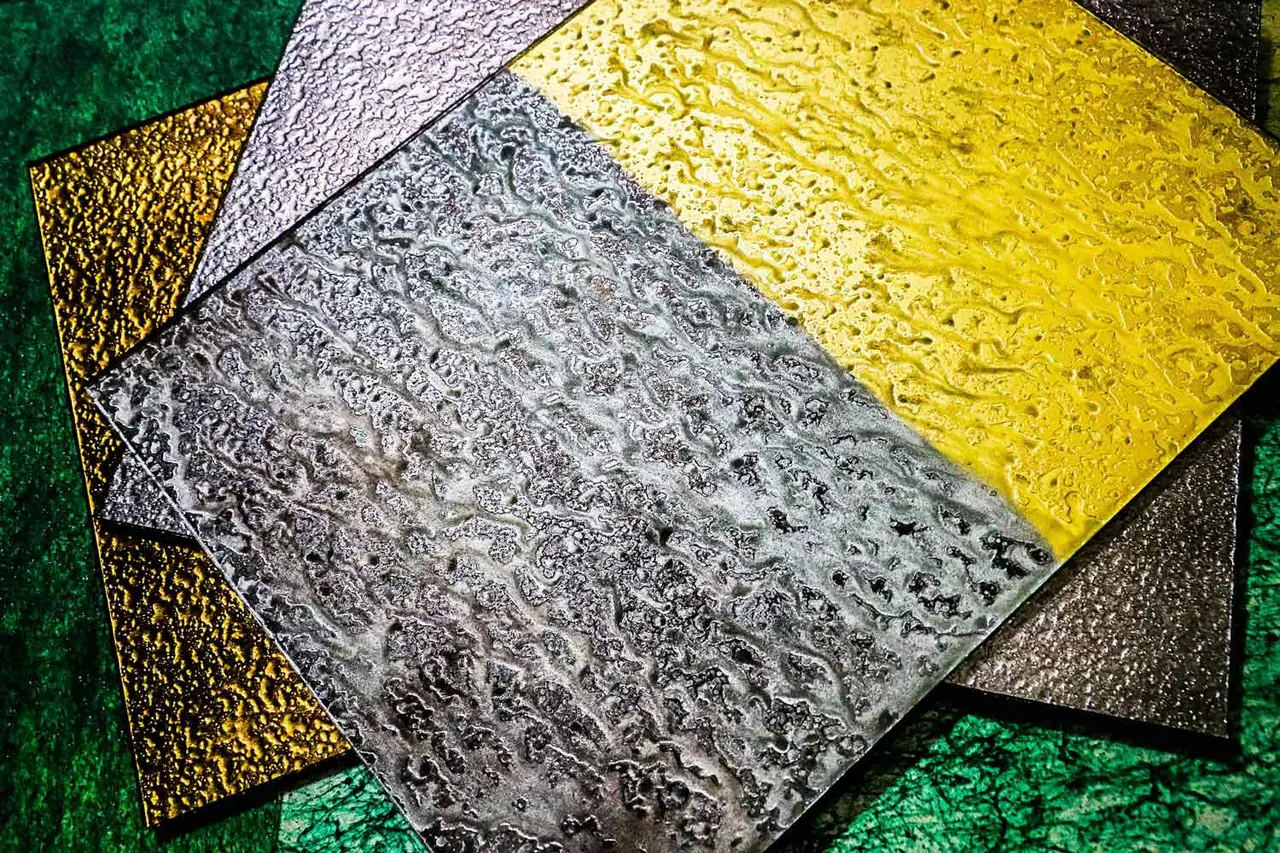
Dom Stekla creates a frost effect on glass and mirrors. It brings remarkable beauty and an unusual "winter" pattern to an interior. Pieces with this effect become a striking detail and underline the elegance and individual style of a room.
How the pattern forms
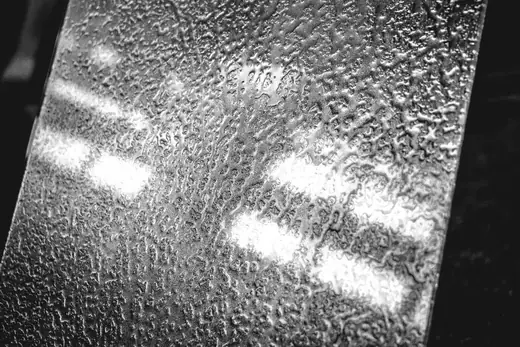
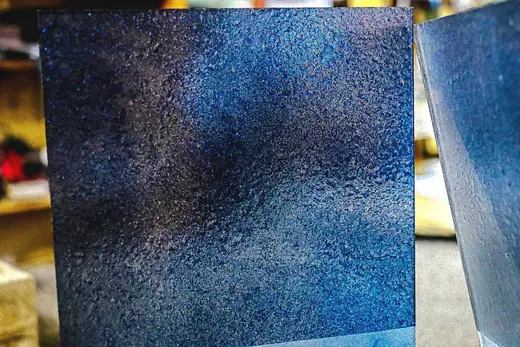
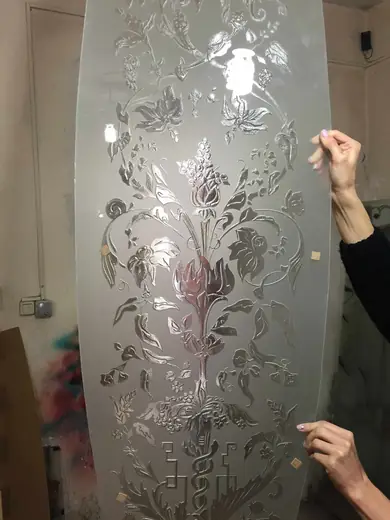
The frost effect, also called the glue chip, chipped glass or hoarfrost effect, is made by "chipping" the glass surface, which gives the pattern depth. First the glass is sandblasted to a matte finish. Then a layer of hot, strong glue solution is applied to the matte surface. As it dries, the glue shrinks and pulls tiny flakes of glass off the surface, forming frost-like patterns.
The pattern never repeats, since every piece is unique, and the craftsman can guide the direction of the pattern to create unusual work on glass.
Where it is used
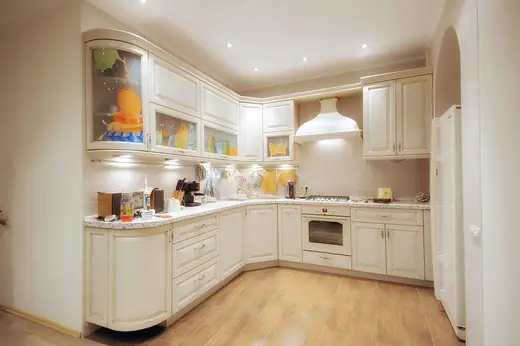
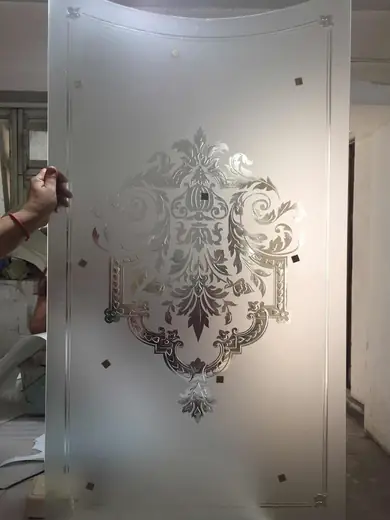
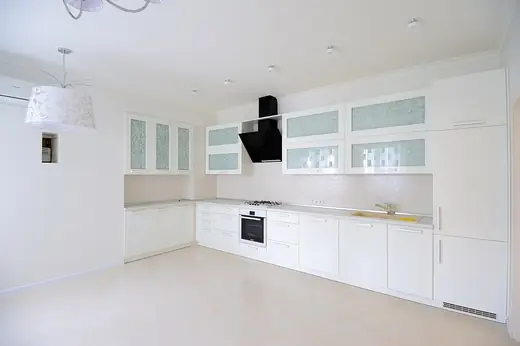
Glass or mirror with the frost effect can be used in Tiffany stained glass, faux stained glass, beveled stained glass, artistic sandblasting and painting. Combined with other techniques, it is used for kitchen fronts, glass for windows and doors, mirror panels and sliding wardrobes with a look of their own. The glass surface takes on an unusual relief, and its texture resembles glass covered in hoarfrost.
Many leading designers believe a frost pattern adds brightness, originality and individuality to interior decor.
See how the effect is used in furniture on the Glass kitchen fronts page.